



MovieFit Story
- Role
- Co-founder & Product Designer
- Timeline
- 2018 – 2025
- Team
- 3 cross-functional members
It was early 2018. Every Friday night, the same question: "What should I watch tonight?"
My friends and I would spend 20 minutes scrolling through Netflix, Hulu, and HBO, jumping between apps, searching IMDb for ratings, googling "where to watch," and still end up rewatching The Office. Discovery apps showed what to watch but not where to find it; streaming services only showed their own catalogs; IMDb and similar sites had great data but weak mobile experiences; recommendation engines were either too complex or too generic. We decided to build MovieFit — a simple, beautiful app to help people decide what to watch next.
What followed was seven years of building, scaling, learning, and ultimately closing a product that reached 1.4 million monthly users. MovieFit became the most formative experience of my career as a designer and product thinker. Here's how it happened.
The problem we kept hearing
It was early 2018. Every Friday night, the same question: "What should I watch tonight?" My friends and I would burn time jumping between apps and sites — and still end up rewatching something familiar. The existing solutions weren't cutting it.
- Discovery apps showed you what to watch but not where to find it.
- Streaming services only showed their own catalogs.
- IMDb and similar sites had great data but terrible mobile experiences.
- Recommendation engines were either too complex or too generic.
We saw this as our opportunity. If everyone we knew was frustrated, maybe we could build something that actually solved it.
First version: shipping in one month
May 2018. We gave ourselves one constraint: ship something in 30 days. No overthinking, no feature bloat. Just solve one problem well.
What shipped
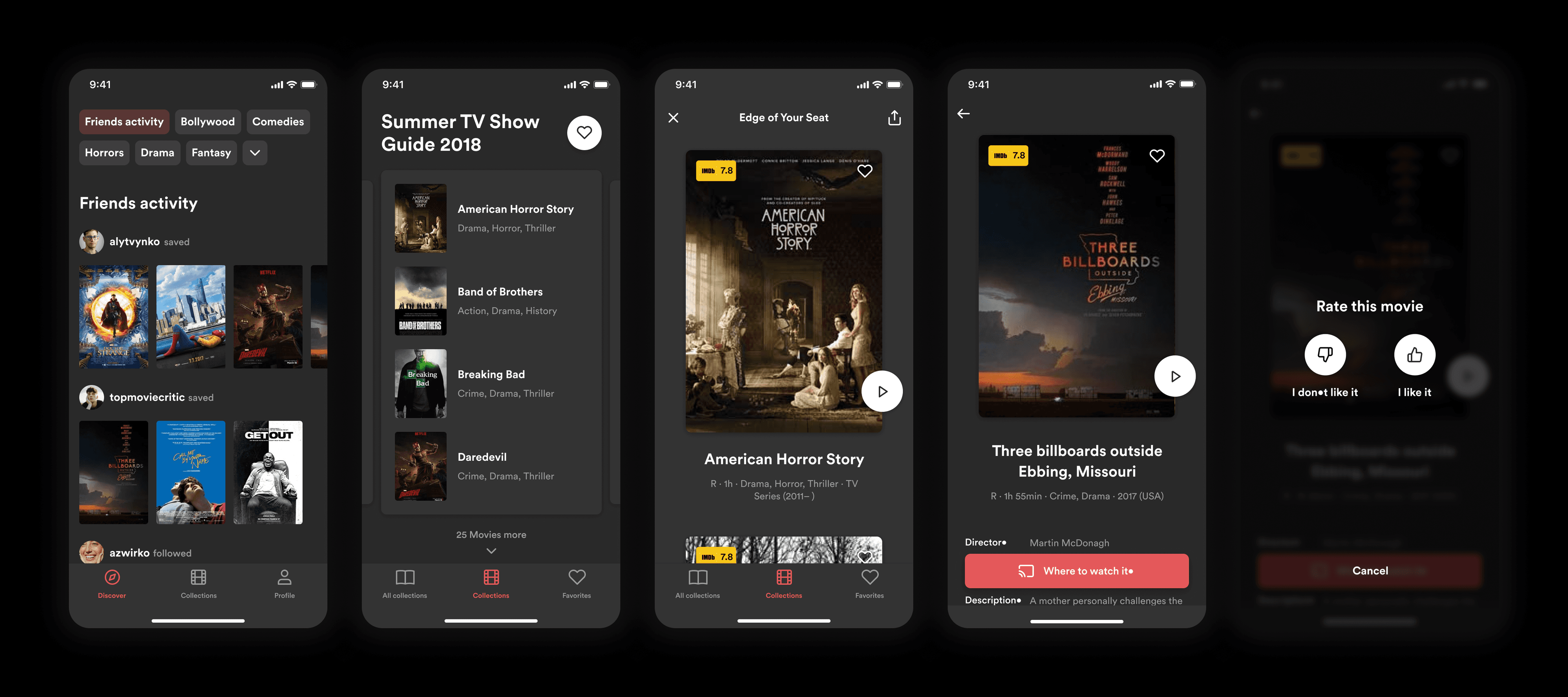
- Curated collections that we handpicked and managed ourselves.
- Quick filters for genre, mood, and rating.
- "Where to watch" integration that showed streaming availability.
That last feature was our secret weapon. In 2018, most apps showed you what to watch but not where to find it. We integrated with JustWatch, TMDB, and other APIs. It sounds simple now, but at the time we were among the first to make this seamless on mobile.
The app was iOS-only, built in Swift. The three of us — myself on design and product, plus a backend and frontend engineer — split everything else. We debated hard in the first week: direction, naming, positioning. By week two we were aligned and building fast.
We launched with zero marketing budget. No press, no ads, no influencers — just an app in the App Store. Within a few months we had 5,000 users. People found us organically, used the app, and came back. That was enough signal to evolve.
Design philosophy: get out of the way
From the beginning, I wanted MovieFit to feel invisible. The goal wasn't to be the most feature-rich app — it was to reduce friction. The app should help you decide, then get out of the way so you can actually watch something.
Featured collections lived at the top. Discovery filters were simple and fast. No complex onboarding, no paywalls blocking basic functionality — just content, beautifully presented.
Even early in my design career, I kept asking: How can I make this simpler? How can I remove a step? How can I make this feel faster?
App evolution: from 5K to 15K users
2019. A year in, we had grown to 15,000 acquired users with over 3,500 monthly actives. That gave us confidence to rethink the product from the ground up.
What we built
- Automated curation — we stopped manually curating every collection and built a system to generate them from trending content, genres, and user behavior.
- Complete discovery overhaul — better filtering, sorting, and personalization so relevant content surfaced faster.
- Social features — Friends Activity, follow/unfollow, and shared watchlists after users kept asking to share what they were watching.
- New visual design — cleaner, more modern, and more confident. Less utility, more experience.
The Swift to React Native pivot
We moved from Swift to React Native via Expo. We didn't have a full-time iOS engineer, and maintaining native Swift was becoming unsustainable. React Native gave us the ability to support the app ourselves, Android for the first time, and faster iteration. Android users could finally use MovieFit.
The rebrand (2019–2020)
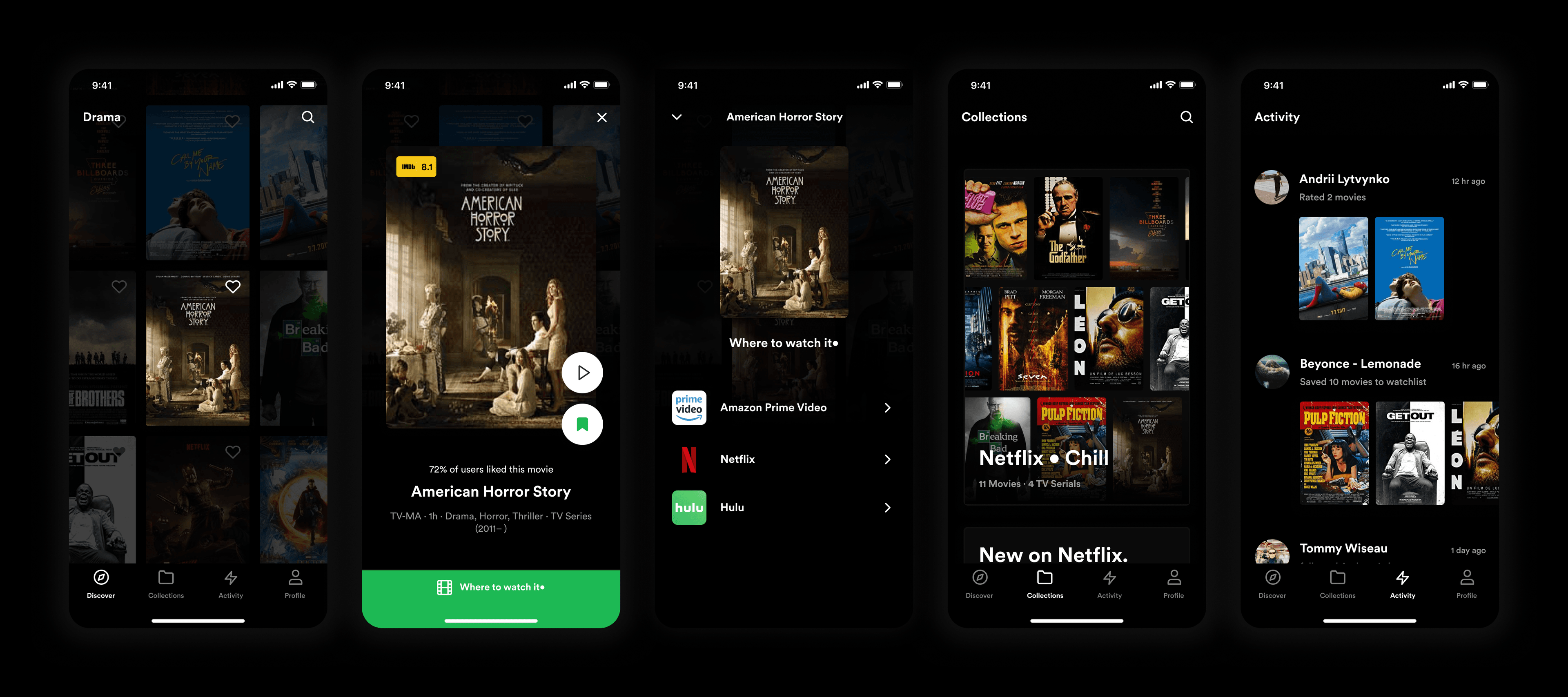
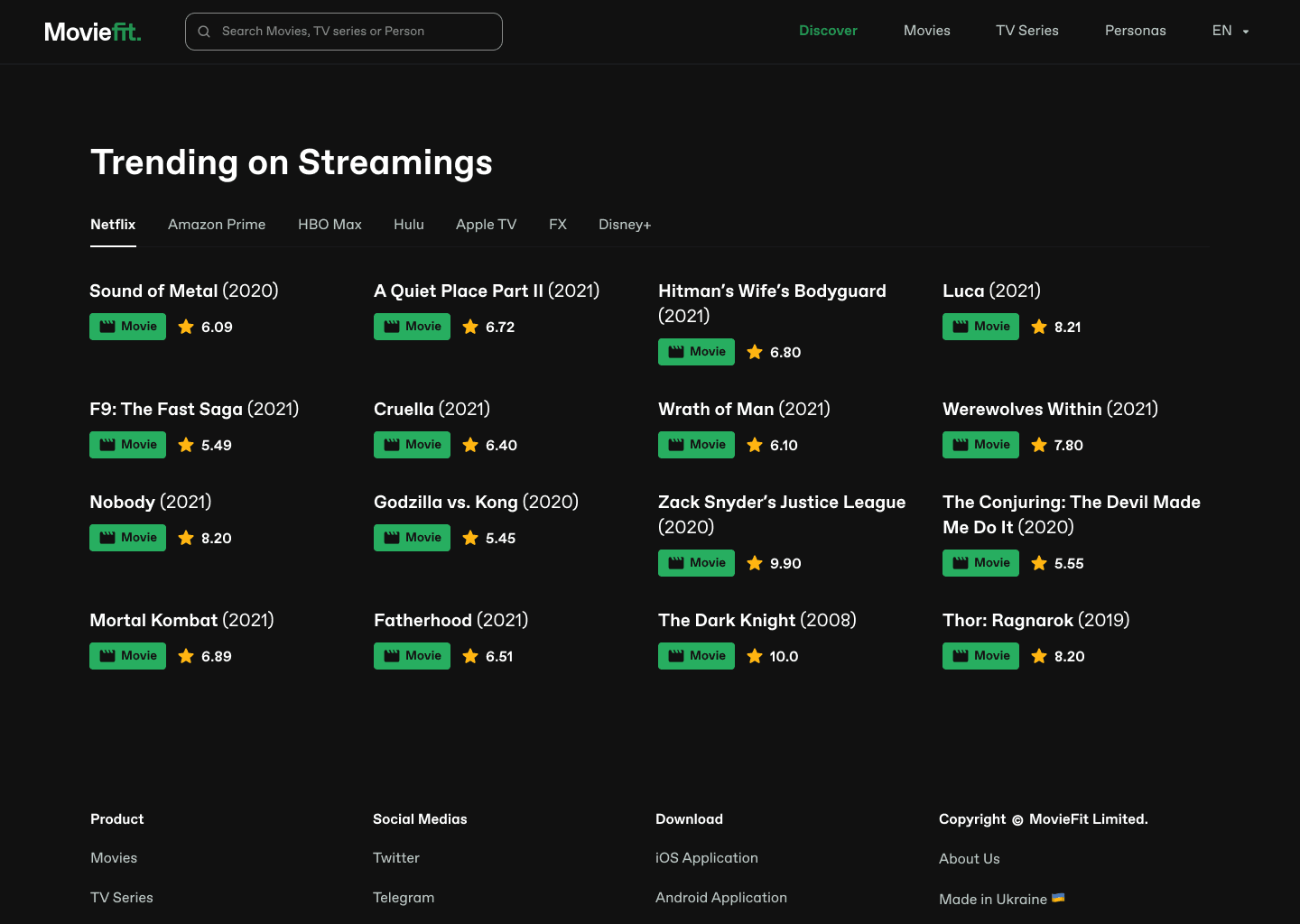
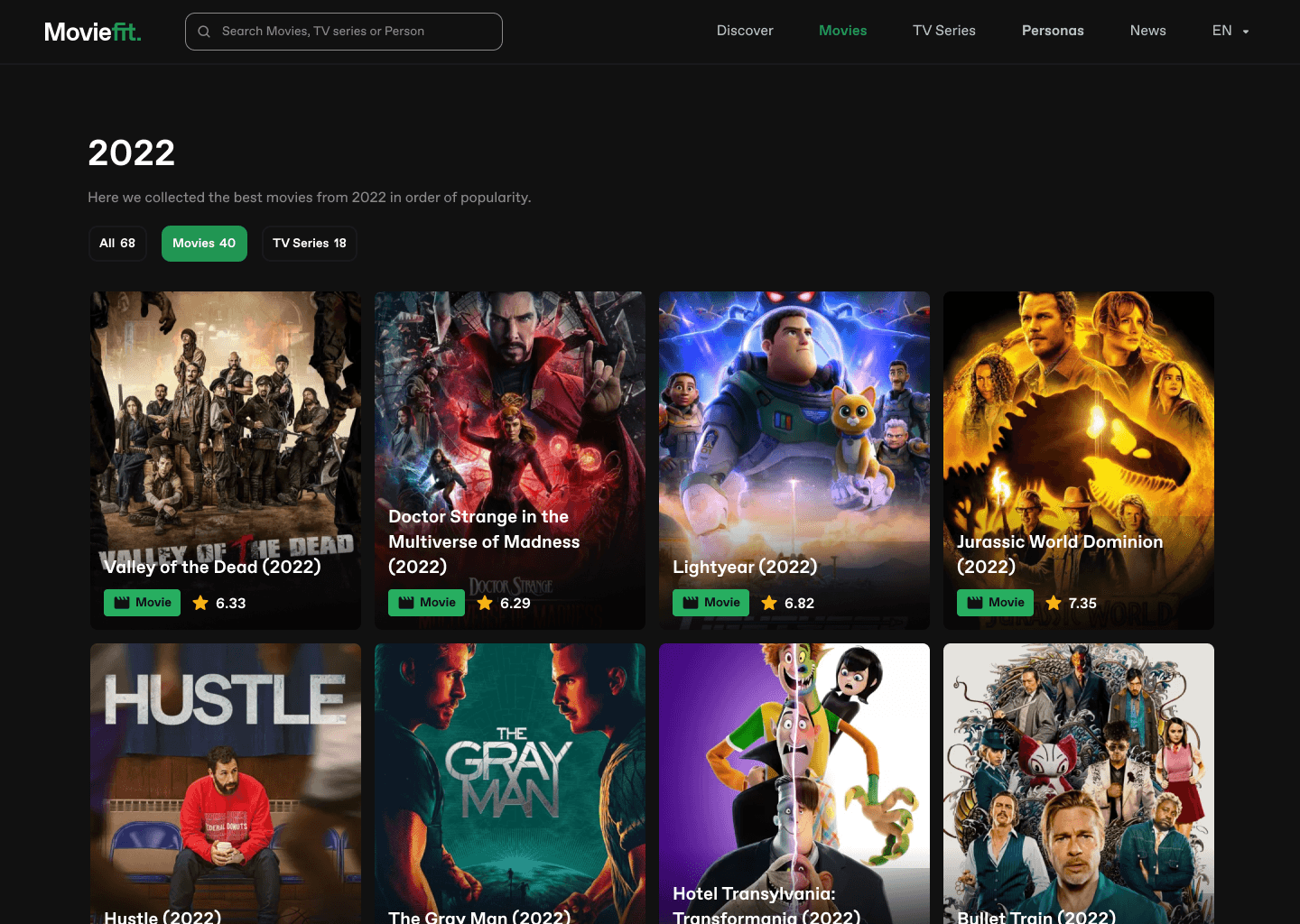
One of the pivotal moments was a full visual overhaul from late 2019 into early 2020. As we expanded to web, I wanted new energy in the product. We kept the name but left the old aesthetic behind. I created a new brand and style system for web, then scaled it back to mobile.
What changed
- Color palette — from muted tones to bolder, more confident colors.
- Typography — a modern typeface with clearer hierarchy.
- Layout — from card-based lists toward more immersive, content-forward layouts.
- Tone — from utility to experience.
The rebrand signaled to users and to us that MovieFit was no longer just a scrappy MVP. We were building something real.
Web expansion: COVID changed everything
Early 2020. We launched web with a modest vision: a lightweight landing page to funnel Google traffic into the mobile app. Discovery worked on web; tracking and social stayed mobile-only.
Then COVID-19 hit. Everyone was home, watching more, and searching "what to watch." Our web traffic surged. The funnel became a product. We invested in full user accounts on web, tracking (watchlists, ratings, watched history), and monetization to offset infrastructure costs.
The infrastructure challenge
Rapid growth is still a problem. As traffic spiked we scaled fast — servers struggled, response times slowed, and we spent nights debugging, optimizing queries, and investing in AWS to stay up. We went from a side project to real infrastructure bills. We needed revenue.
- Display ads (Google AdSense).
- Amazon affiliate links for rentals and purchases.
- JustWatch referrals for streaming sign-ups.
It wasn't much, but it kept the lights on.
Golden era: 1.4M monthly users
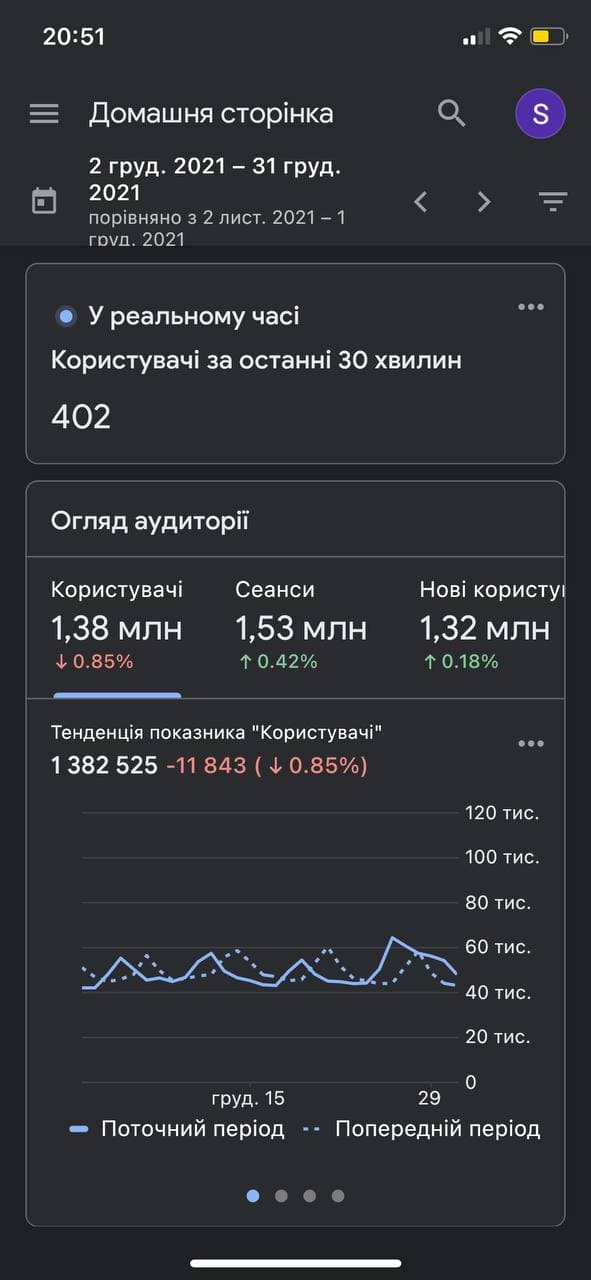
December 2021 was our peak: 1.4 million monthly active users.
The biggest driver was AI-powered localization. Our backend co-founder, Serhiy, proposed using DeepL to translate English content into Portuguese, Spanish, French, German, and more — opening South America and Europe. We had gone global without ever planning for it.
At our height, top markets were Brazil (21%), the United States (17%), Spain (12%), France (8%), and Germany (6%).
The SEO strategy that worked
We spent $0 on marketing. Everything was organic SEO. Our approach:
- Individual pages for every movie and TV show — thousands of indexed URLs.
- Localized pages — Portuguese, Spanish, and more for the same titles.
- Value beyond IMDb — Spotify playlists on movie pages, news links, cross-linked related content.
- Our own content — including a news section with original articles on trending shows.
We ranked for long-tail queries like "best thriller movies on Netflix," "where to watch Parasite," and "top rated shows 2021." It worked beautifully — until it didn't.
The decline: when growth reversed
In 2022, Google rolled out major SEO algorithm updates. Our rankings dropped hard — from page one to page three, five, or gone. Organic search was our only growth channel, so traffic collapsed. Many content sites saw the same drop. For us, with no paid acquisition and no diversified traffic, it was devastating.
The retention problem we ignored
We were growing fast but not retaining well. No aggressive re-engagement: no email campaigns, no retention-focused push, no deep personalization to bring people back daily. New users browsed, maybe saved a few titles, then disappeared. When acquisition stopped, the base declined.
If I could go back, I'd fix retention first. Growth without retention is expensive churn.
The recommendation engine experiment
2022–2023. We built our own recommendation engine to improve retention and engagement — collaborative filtering ("users who liked X also liked Y"), content-based signals from actors, directors, and genres you rated highly, and personalized rankings from watch history.
It worked. Recommendations were good and users liked them. But it was too expensive to run at our scale on a freemium model with low conversion. The math didn't work, so we shut it down.
The Ukraine war and team burnout
In early 2022, Russia invaded Ukraine. One of our co-founders was still there. This wasn't only a business challenge — it was deeply personal. The team couldn't operate at full capacity. Development slowed and releases became infrequent. We volunteered where we could.
The product fell behind. Bugs lingered, requests piled up, and the gap between what we wanted to ship and what we could ship widened. We kept the lights on for users, cut costs, and moved into maintenance mode. MovieFit was no longer our primary focus.
Closing MovieFit
In 2025 we decided to shut MovieFit down. We were at about 10,000 monthly users — meaningful, but far from our peak. We'd kept it running for loyal users, but the three of us no longer had the time, energy, or enthusiasm the product deserved.
The final trigger was lack of time and energy: full-time roles and other projects, and seven years of nights and weekends. We announced the closure. Some users were sad, some understanding; a few offered to buy or run it. We appreciated that, but it was time.
We still hope to come back to this problem someday. The need hasn't gone away. For now, MovieFit is closed.
What I learned
On product
- Solve one problem really well before expanding. "Where to watch" was simple but differentiated us early.
- Growth without retention is expensive churn — we over-focused on acquisition.
- Localization can unlock huge markets. AI translation opened South America and Europe with relatively little effort.
- SEO is powerful but fragile. We had no backup when the algorithm turned.
On design
- Less is more — design for speed and simplicity over feature density.
- Iteration compounds, and each version got better because I pushed on the details.
- Design systems evolve with the product. Our visual language matured from v1 to v2.
On teams
- Small teams can move fast — three people wearing many hats shipped more than I expected.
- Alignment matters — we debated hard, then aligned, and execution got faster.
- External factors matter. The war affected us deeply. Teams are people.
On business
- Infrastructure costs can outrun revenue — at 1.4M users, ads and affiliates didn't scale like subscriptions.
- Freemium is hard. Low conversion means you need a massive base.
- Know when to walk away — we kept MovieFit alive longer than we should have, and closing was the right call.
Looking back
MovieFit wasn't a financial success. We didn't get acquired, raise funding, or build a sustainable business. But it gave me something more valuable than money: experience.
I learned how to design and ship from zero, make hard trade-offs under constraints, scale past a million users, navigate growth and decline, work on a small cross-functional team, and wear many hats — designer, PM, marketer, support.
MovieFit shaped how I think about product and design. Every project since has carried those lessons.
If you're on a side project that feels small or uncertain — keep going. The experience alone is worth it.